Ranua Zoo in winter: who is awake
Most of the animals at Ranua Wildlife Park live outdoors through the snow, including all three polar bears. The brown bear does not, because she sleeps until spring. Here you can check who is around, who is indoors, and how to improve your odds on a short winter walk.
Two bears, two winters
The question people get wrong before a winter Ranua Zoo tour concerns the bears. Both species appear in photos from the park, and only one of them can be seen while there is deep snow on the ground.
Polar bears do not hibernate here. Three females share one enclosure and stay awake all winter, and a viewing shelter with ground-level windows lets you watch them from down low.
The brown bear hibernates. The park has one, a female, and says she will be visible again in spring without promising a date. Check its animal pages if you travel around the change of season.
You may read "Finland's only polar bear" or "over 200 species" on some booking pages. The park itself speaks of three polar bears, the only ones in Finland, and of about 50 northern species and around 150 animals.
The winter list, animal by animal
All the animals marked as outdoors live in enclosures along the trail. Being outdoors does not mean being in view, since many have trees or a den to disappear into, so treat each tip as a nudge and expect some misses.
| Animal | In winter | Tip |
|---|---|---|
| Polar bears | Awake and outdoors, three females | Wait in the shelter at the low windows |
| Brown bear | Hibernating, not visible | Come back after she wakes in spring |
| Gray wolf | Outdoors | Look between the trunks before you look for movement |
| Lynx | Outdoors | Scan slowly for a still shape against the snow |
| Wolverine | Outdoors | Return on a second look if the enclosure seems empty |
| Arctic fox | Outdoors | Ask about the day's feeding at the ticket desk |
| Moose and reindeer | Outdoors | Large, so check the far end of the enclosure |
| Musk ox | Outdoors | Look for a dark, low shape in the snow |
| Eurasian otter | Outdoors, rests mostly by day | Try at the start and once more on the way out |
| Eurasian beaver | Outdoors | Give it a few quiet minutes |
| Snowy and great gray owls | Outdoors | Check the perches, then the corners |
| Common crane, honey buzzard, short-eared owl | Indoors, not visible | A warmer month |
| Domestic animal yard | Closed | June to August only |
The outdoor group is longer than the table. Red fox, wild forest reindeer, white-tailed deer, wild boar, Siberian musk deer, golden eagle, raven and whooper swan are all listed as visible in winter, along with Ural, eagle and hawk owls.
Cats, wolves and the art of standing still
The predators reward people who stop. A lynx can sit in plain view for minutes without anyone noticing, and a group marching past in single file will usually miss it.
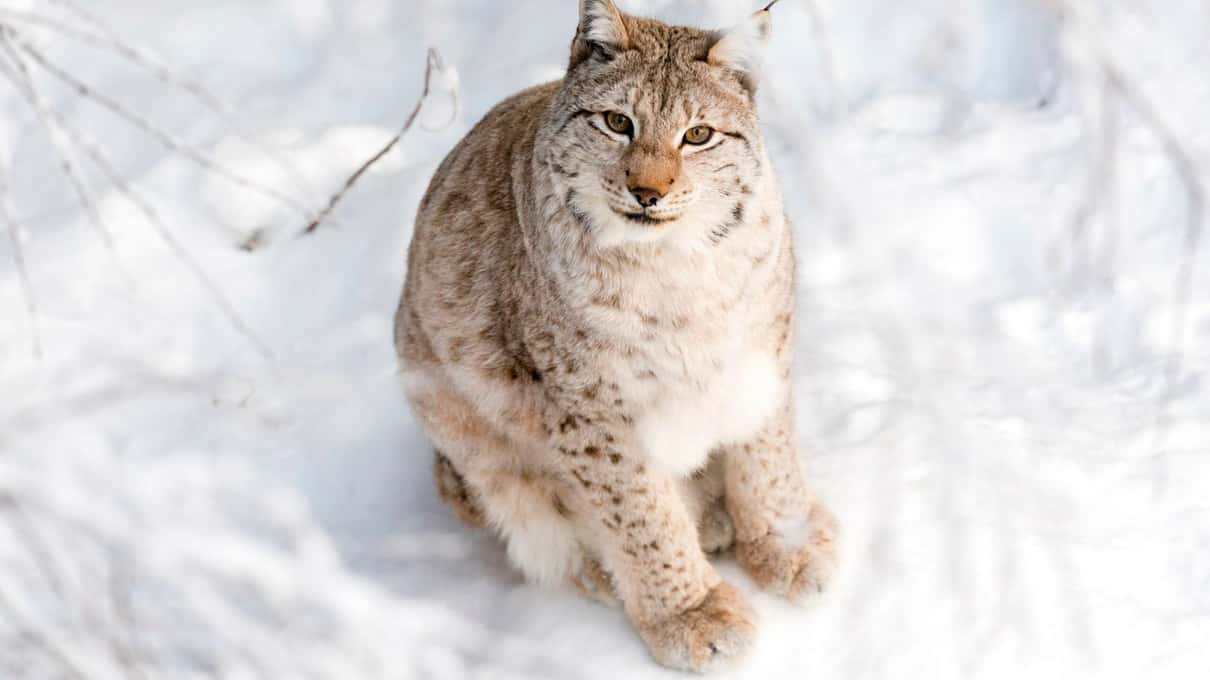
Try three minutes of silence at each fence, eyes moving from left to right. If nothing stirs, carry on and come back, because the wristband is valid all day and the trail is only about 2.8 km (1.7 miles) long.
A guide helps here more than anywhere else. Guests on BookLapland's walk describe having hidden animals pointed out to them, and our article on guided options says which tours send a person in with you.
A second pair of eyes on the trail
BookLapland's guide walks the whole route with you, and overalls and boots come in adult and child sizes. The tour runs with at least two participants, and it is the dearest of our six.
Otters, owls and the arctic fox
The otter enclosure is at the start of the trail, and you pass it again on the way out. They rest mostly by day, so two tries are better than one long wait at the beginning.
Owls ask for a different kind of looking. The great gray owl can sit close to a dark trunk, and the snowy owl blends into snow, so search for a pair of eyes first.
For the arctic fox, feeding time is the moment to aim for. The winter program runs from about mid-November to mid-March and includes a fox feeding on most weekdays, plus one on Saturday and Sunday.
On most days from Monday to Friday there is also a keeper talk by the polar bears. Times change and the day's list hangs at the ticket desk, and guests watch from outside the enclosure.
Light decides what you see
The trail has no lighting. In December and early January the sun is down around 2 pm, so whatever you have not found by early afternoon will be a dark shape behind a fence.
Aim to walk as soon as the gates open at 10 am and eat afterward. The five tours we compare leave Rovaniemi between 9:00 and 10:00 am, which fits well, and our season guide page explains how February and March change the picture.
Cold matters too, because standing still is what finds animals and also what chills you. One guest on a guided walk found -25 °C (-13 °F) hard for so many hours outside, so read what to put on before you plan long stops.
Who should come in winter, and who should wait
Come in winter for polar bears, wolves, foxes and owls. Wait for the warmer part of the year if the brown bear or the domestic animal yard is the reason for your trip, and confirm with the park that she is up.
For a closer look at the white bears, see where to stand for polar bears. Anyone wondering how much walking this means can check the time you need inside.
If winter is settled, a trip to Ranua Zoo from Rovaniemi takes about five hours with most companies. The six Ranua options side by side show which ones leave you the longest at the fences.